Skip to content


Bambu PAHT-CF


Bambu PAHT-CF is a composite of PA12 and carbon fiber. Inheriting the advantages of low water absorption from PA12 and high-performance carbon fiber, Bambu PAHT-CF offers excellent mechanical and thermal properties that can be maintained well even when the prints get wet. Higher Z adhesion layers and flexibility make it ideal for creating engineering parts such as functional prototypes, machining fixtures, injection molds, jigs, and low-volume production parts.


Low water absorption


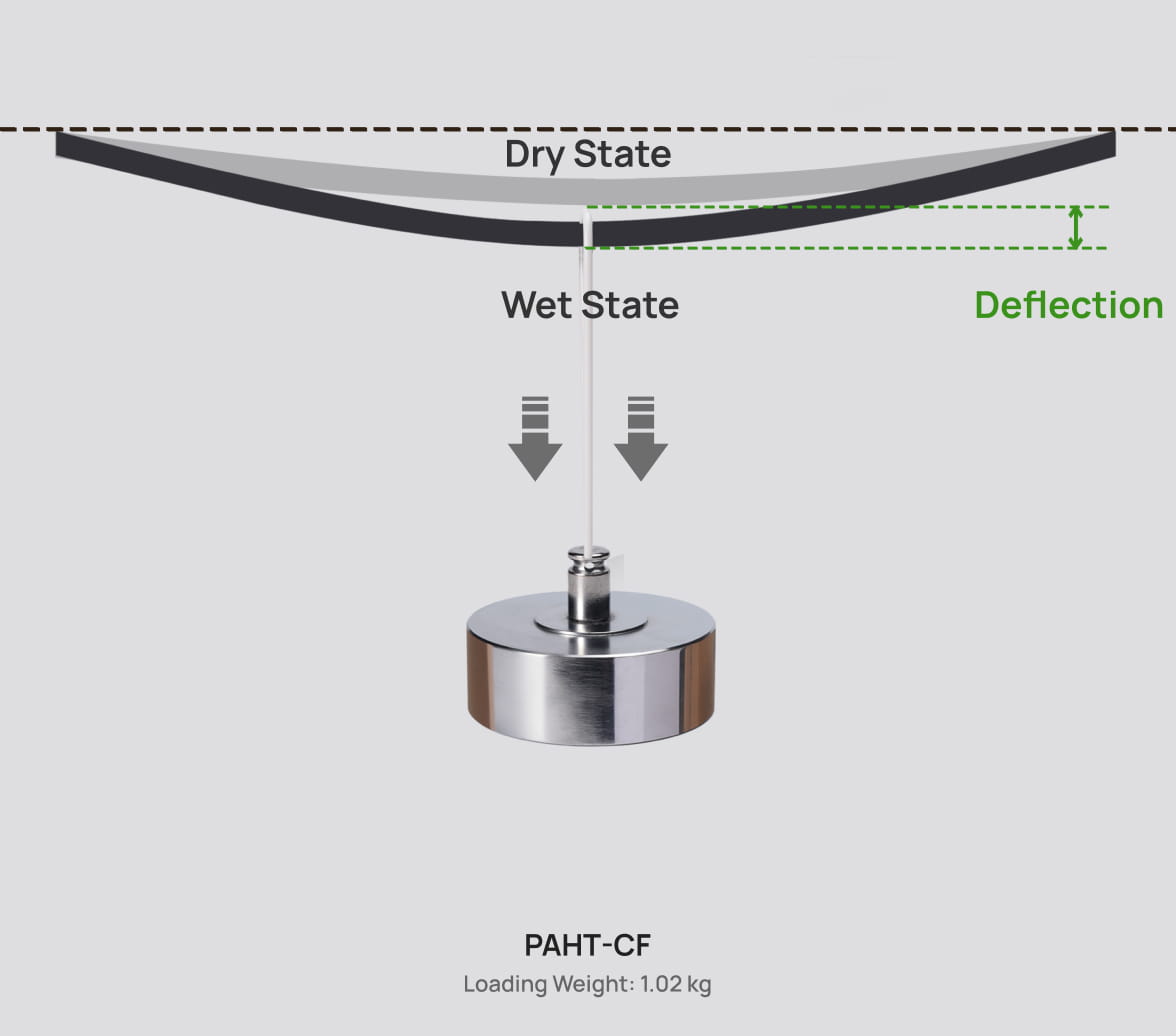
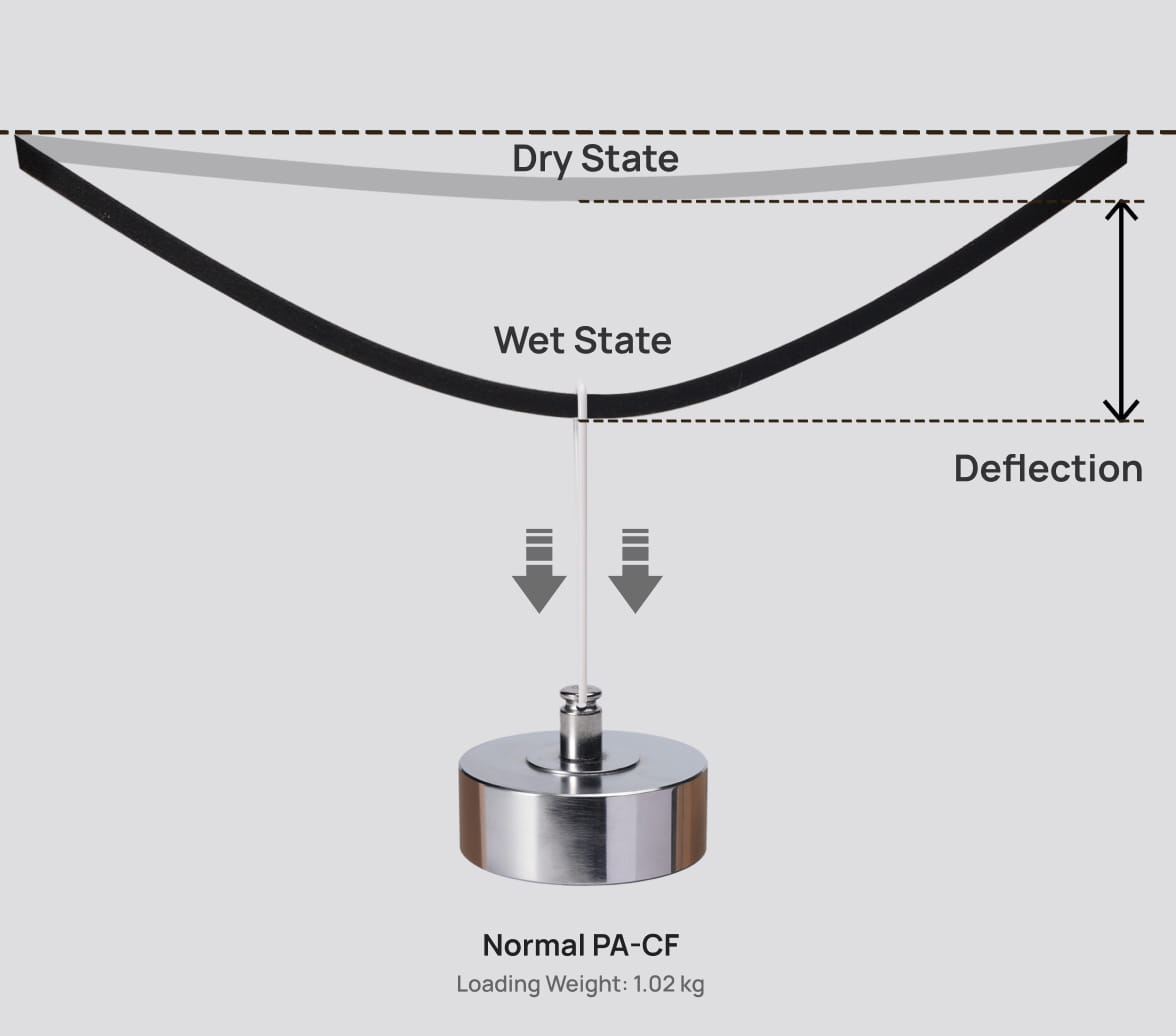
With a 50% lower water absorption rate compared to normal PA-CF,


Bambu PAHT-CF maintains excellent mechanical properties and dimensional stability even when exposed to high humidity.


Deflection from Dry to Wet


paht-cf paht-cf


Mechanical Properties Comparison


Normal PA-CF PAHT-CF
Saturated Water Absorption Rate/% ( 25 °C, 55% RH ) 1.70 0.88
Bending Strength - XY/MPa (Dry) 128 125
Bending Strength - XY/MPa (Wet) 76 115
Bending Strength - Z/MPa (Dry) 48 61
Bending Strength - Z/MPa (Wet) 34 49
Bending Modulus - XY/MPa (Dry) 4420 4230
Bending Modulus - XY/MPa (Wet) 2210 3640
Bending Modulus - Z/MPa (Dry) 1470 1820
Bending Modulus - Z/MPa (Wet) 770 1480
Decline rate of mechanical properties after absorbing water/% 40%-45% 12%-18%


*Both PA-CF and PAHT-CF need to be dried at 80 °C for 12 hours before printing.


Exceptional Z-bonding


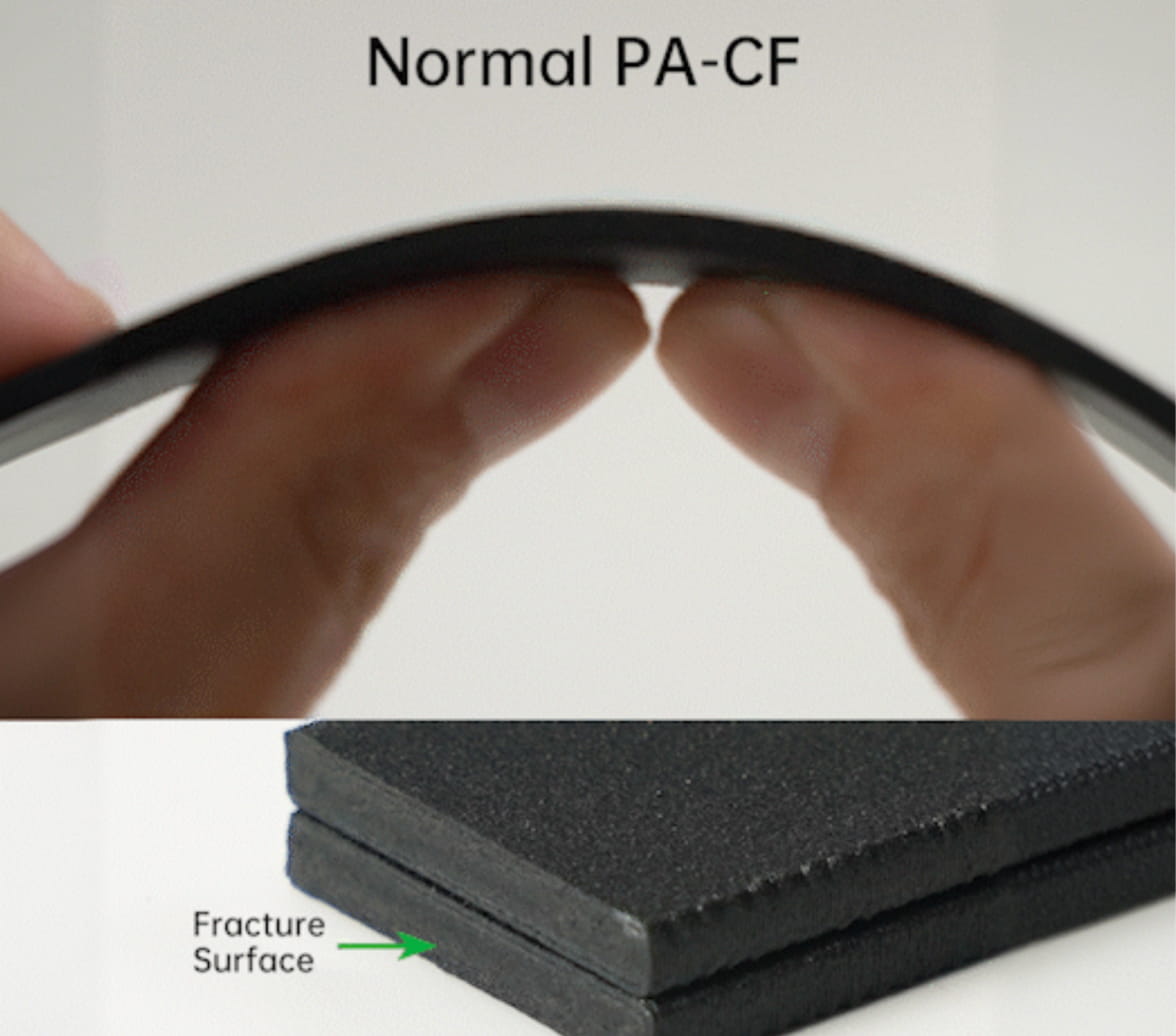
Bambu PAHT-CF shows much higher adhesion in Z layers compared to normal PA-CF,


bringing it the ability to withstand high levels of impact or stress without breaking or deforming.
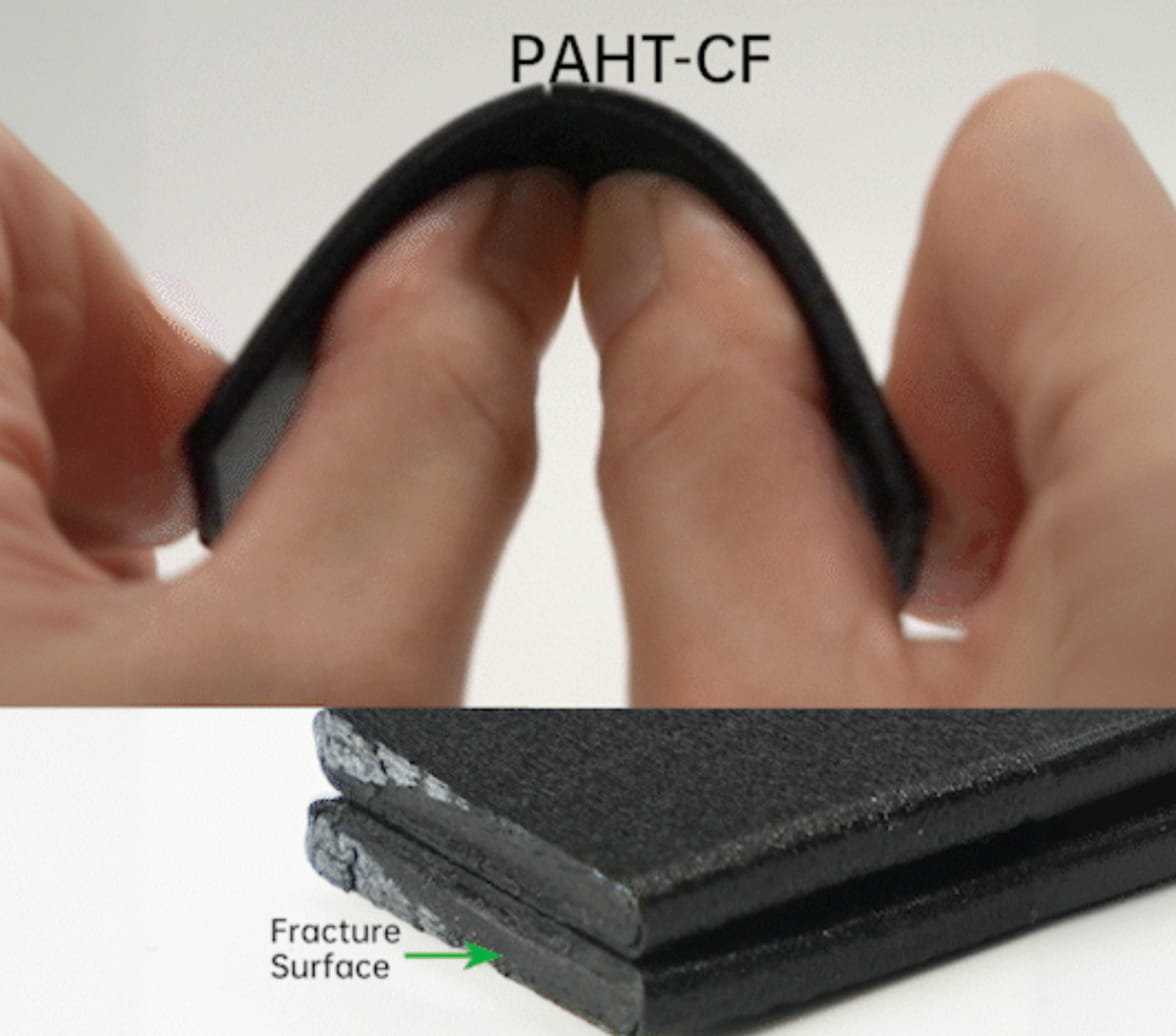


paht-cf paht-cf


Z-layer Performance


Normal PA-CF PAHT-CF Improved %
Bending Strength - Z/MPa 48 61 27%
Bending Modulus - Z/MPa 1470 1820 24%
Impact Strength - Z/(kJ/m²) 5.7 13.3 133%


*Both PA-CF and PAHT-CF need to be dried at 80 °C for 12 hours before printing.


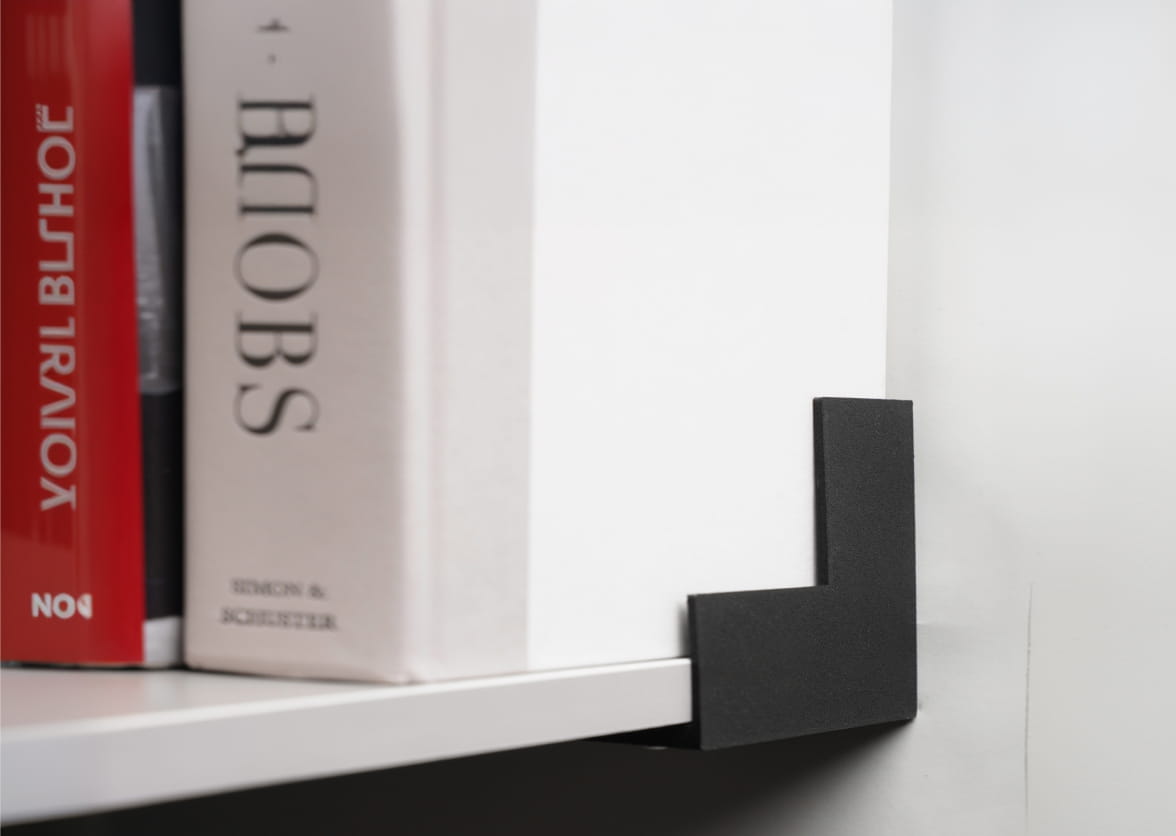
High tensile strength


Bambu PAHT-CF is designed to meet the demands of various industrial


and engineering applications where high strength and durability are required.


Designed for high-temperature resistance


The heat deflection temperature of Bambu PAHT-CF is up to 194℃ (0.45MPa)*, making it useful in applications where the printed parts may be exposed to high temperatures without deforming or losing their strength.


*The long-term temperature resistance is related to the structure and usage scenario of the model itself.


Reusable spool


Bambu PAHT-CF comes with a high-temperature resistant spool, which is not prone to deformation in the drying process. Continuing our concept of reducing plastic waste, the spool can also be reused with other Bambu refills.


图片加载失败文案 图片加载失败文案


Accessory Compatibility


Recommended Not Recommended
Build Plate Smooth PEI Plate, Textured PEI Plate Cool Plate SuperTack
Hotend Hotend with Hardened Steel 0.4mm / 0.6mm (recommended) / 0.8 mm* Hotend with Stainless Steel Nozzle All Size
Glue Glue Stick Liquid Glue


*As the nozzle size increases, the probability of clogging decreases, but the print quality also decreases. Therefore, it is recommended to use a 0.6 mm Hardened Steel nozzle to avoid clogging while maintaining optimal print quality.


RFID for Intelligent Printing


All printing parameters are embedded in RFID, which can be read through our AMS (Automatic Material System).
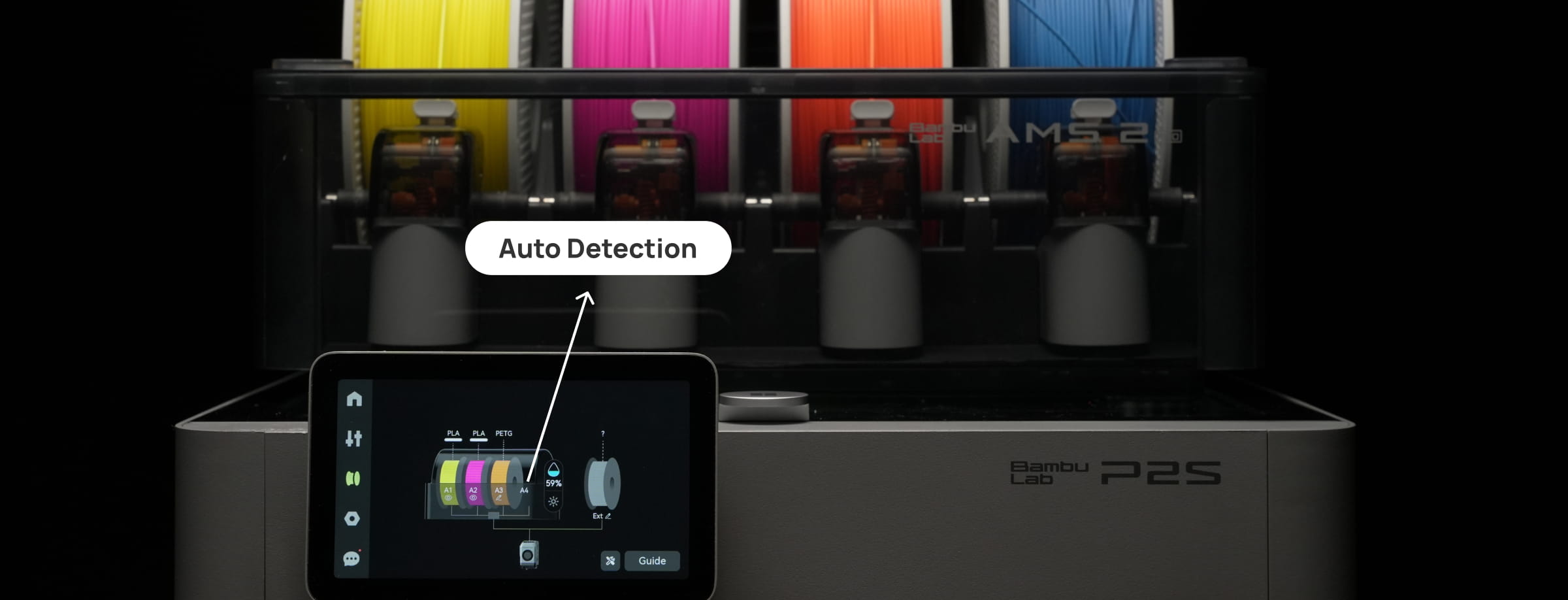

Load and print! No more tedious setting steps.


rfid rfid


Parameters Comparison


Learn more different filaments comparison on Bambu Filament Guide >>


PET-CF PAHT-CF
Composition PET, carbon fiber PA 12 and other long-chain PA, carbon fiber
Hotend Compatibility Hotend with Hardened Steel 0.4mm / 0.6mm (recommended) / 0.8 mm
Build Plate Compatibility Cool Plate SuperTack, Smooth PEI Plate, Textured PEI Plate Smooth PEI Plate, Textured PEI Plate
Glue Glue Stick / Liquid Glue Glue Stick
AMS Compatibility NO YES
Print Speed < 100 mm/s < 100 mm/s
Toughness (Impact Strength - XY) 36.0 kJ/m² 57.5 kJ/m²
Strength (Bending Strength - XY) 131 MPa 125 MPa
Stiffness (Bending Modulus - XY) 5320 MPa 4230 MPa
Layer Adhesion (Impact Strength - Z) 4.5 kJ/m² 13.3 kJ/m²
Heat Resistant(HDT, 0.45 MPa) 205 °C 194 °C
Saturated Water Absorption Rate / % (25 °C,55% RH) 0.37 0.88


Recommended Printing Settings
Drying Settings (Blast Drying Oven) 80 °C, 8 - 12 h
Printing and Keeping Container's Humidity < 20% RH (Sealed, with Desiccant)
Nozzle Temperature 260 - 290 °C
Bed Temperature (with Glue) 80 - 100 °C
Printing Speed < 100 mm/s


Physical Properties
Density 1.06 g/cm³
Vicat Softening Temperature 220 °C
Heat Deflection Temperature 194 °C
Melting Temperature 225 °C
Melt Index 14.4 ± 2.0 g/10 min


Mechanical Properties
Tensile Strength 92 ± 7 MPa
Breaking Elongation Rate 8.4 ± 1.8 %
Bending Modulus 4230 ± 210 MPa
Bending Strength 125 ± 7 MPa
Impact Strength 57.5 ± 3.4 kJ/m²


Printing Tips


• Drying conditions: 80℃ for 8 hrs. PAHT-CF is highly sensitive to humidity. To achieve optimal printing performance, it is recommeded further drying before use and after storage. For more details please refer to: Filament drying instructions on WIKI.


• Bambu PAHT-CF has high thermal insulation requirements during the printing process, making it unsuitable for use with open-frame printers.


• For better print results, please refer to: Printing tips for Engineering materials on WIKI.


• When printing a model with support, we recommend removing the support structures within 2 hours after printing to prevent them from sticking after absorbing moisture. If sticking occurs, dry the model to ease the removal.


What's in the Box


图片加载失败文案 图片加载失败文案

Filament with Spool*1 & Desiccant*1


图片加载失败文案 图片加载失败文案

Package*1


*Test Conditions


Specimen Size 150 mm (L) * 10 mm (W) * 2.5 mm (H)
Loading Weight 1.02 KG
Printing Settings All specimens were printed at a nozzle temperature of 280℃, bed temperature of 100℃, and printing speed of 100mm/s.
Filament States
•Dry specimens were annealed and dried at 80°C for 12 hours before testing.

• Wet specimens were placed under the environment conditions of 25℃, 55% RH and reached the saturated water absorption rate.


Quick Info

Contact Information

Business Hours

Mon - Sat, 10 AM - 8 PM | Closed on Sunday

Call Us